Establishing a school kitchen in Sumba
The problem
Stunting is impaired growth caused by chronic malnutrition. Its effects are not limited to height: learning and long term health are affected too, and much of the damage cannot be reversed once a child is past a certain age.
East Nusa Tenggara has a stunting prevalence of 37%, nearly double the national rate of 19.8%, and the second highest of any province in Indonesia.
Source: Indonesian Nutritional Status Survey (SSGI) 2024, Ministry of Health of the Republic of Indonesia. Retrieved 8 August 2026.
The government’s Makan Bergizi Gratis programme, the national free nutritious meals programme, reaches millions of children, but its coverage is not yet even. In Kabupaten Sumba Barat Daya, the coordinator for the SPPG central kitchen units has stated there are around 120,000 school children with 8 kitchens serving roughly 21,000 of them.
Source: The SPPG coordinator for Kabupaten Sumba Barat Daya, quoted in Pos-Kupang, July 2026. Retrieved 7 August 2026.
Our approach
Built to the SPPG standard
Food safety guidance places cooked food in the risk phase when it is held below 60°C for more than two hours. That is why the six kilometre service radius exists, and it is the measure used in our own siting analysis. The kitchen will be designed and built to meet that standard from the first day rather than brought up to it later.
One kitchen, done properly
We will choose one location, build or retrofit the kitchen until it meets hygiene and sanitation standards, train local cooks, and then run it every school day.
Ingredients from local markets
Wherever possible, ingredients will be bought in the same district, so that the money coming in will also become income for families around the school.
Source: Adapted from the WHO Five Keys to Safer Food and HACCP principles (Codex Alimentarius). Retrieved 7 August 2026.
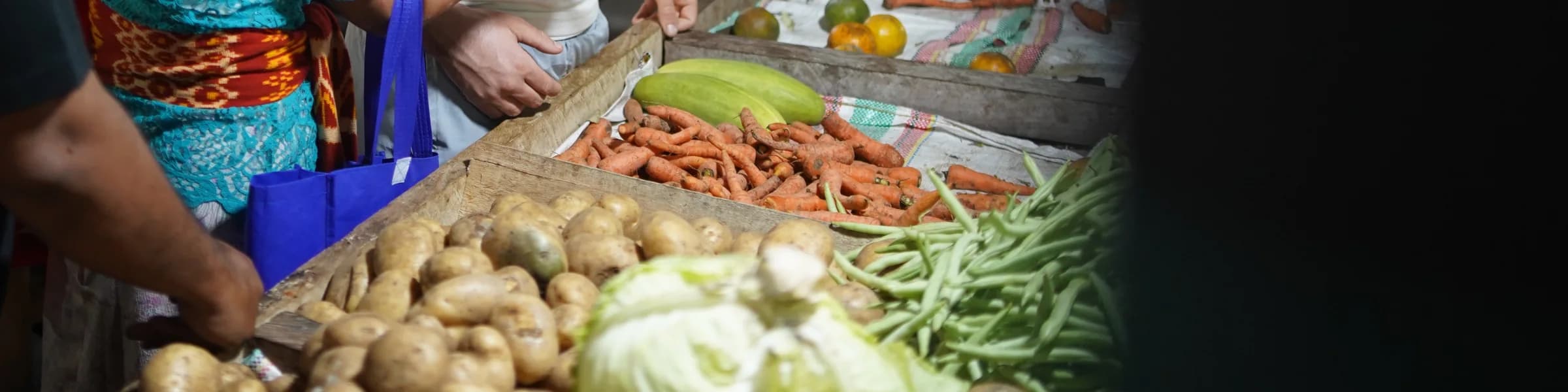
Local sourcing
Wherever possible, ingredients will be bought in the same district, so that the money spent will also become income for families around the school.
The standard we will build to, and how we will prove it
The foundation has no kitchen, no kitchen staff, no hygiene certificate, no cold chain and no confirmed power supply. The list below is a set of commitments, not a description of capabilities that already exist. Each control names the record that will evidence it, and we will publish those records.
Core temperature when cooking
≥74°C
NEXTRecord that will evidence it
A temperature record for every menu, signed by the cook in chargeTemperature at service
≥60°C
NEXTRecord that will evidence it
A temperature record taken at the point of servicePot to plate interval
Under 2 hours
NEXTRecord that will evidence it
A record of the time cooking finished and the time service beganRetained sample of every menu
Refrigerated, kept 24 hours
NEXTRecord that will evidence it
A retained sample log and a photograph of the sample refrigeratorCold storage
0 to 4°C
NEXTRecord that will evidence it
A daily refrigerator temperature recordReceipt of raw animal protein
≤4°C
NEXTRecord that will evidence it
A goods received record from the supplierKitchen layout
5 zones, one way flow
NEXTRecord that will evidence it
The layout drawing and the food hygiene and sanitation label issued by the local health office
Source: Adapted from the WHO Five Keys to Safer Food and HACCP principles (Codex Alimentarius). Retrieved 7 August 2026.
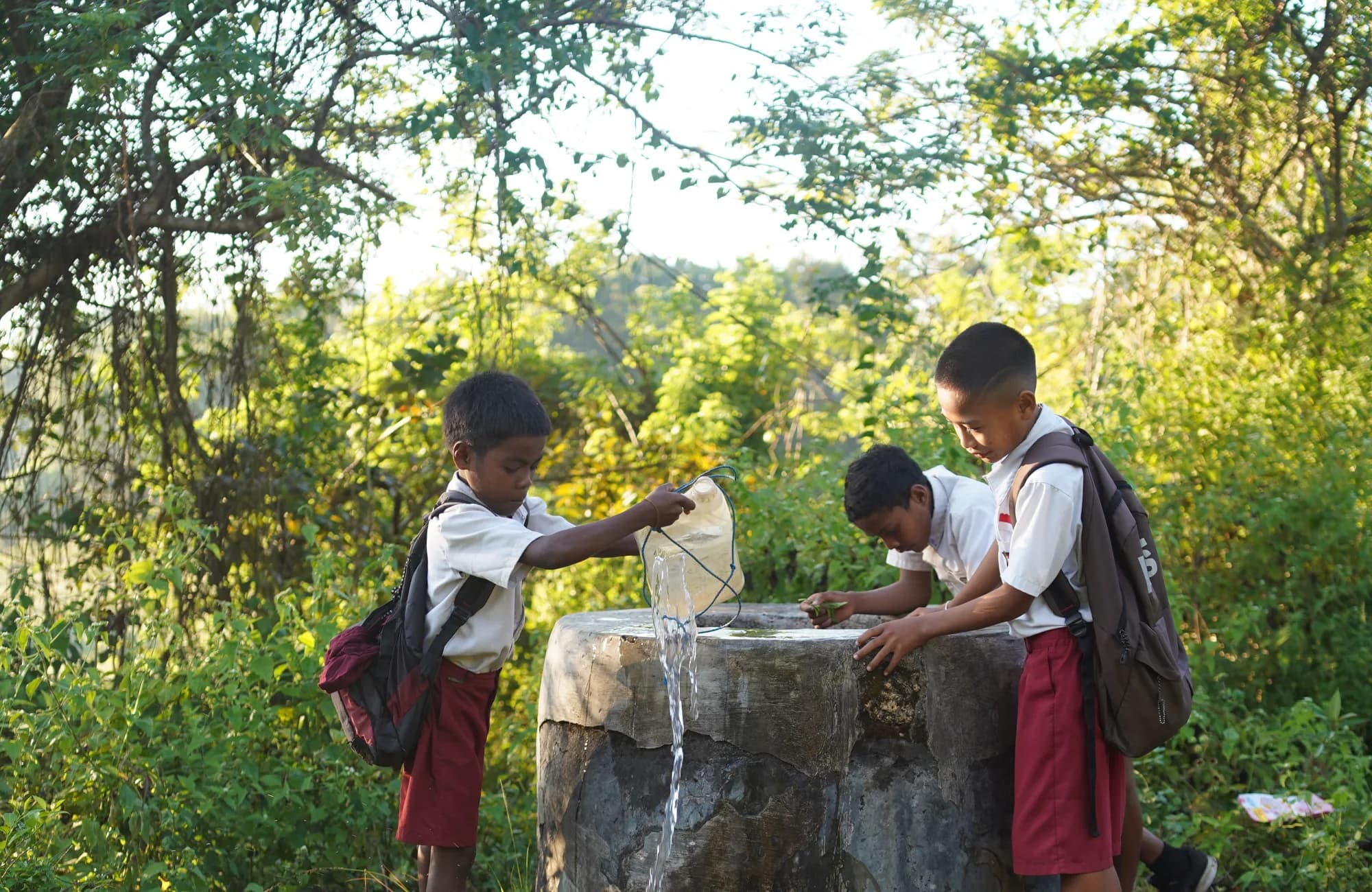
A kitchen needs a reliable water supply. A borehole is its own line in the capital cost, and none has been built.
Costs
We publish our cost figures because donors are entitled to compare them. Capital cost and operating cost are two different things, and we never merge them into a single figure.
Capital cost, one off
One off, before freight
| Item | Estimated cost |
|---|---|
| Refit an existing building to the SPPG standard, capacity 3,000 portions a day | $61,300 to $122,700 |
| Borehole, if one is needed | $3,100 to $6,100 |
The largest items inside that figure are the five zone kitchen fit out with a one way flow, commercial cooking and steaming equipment, stainless preparation surfaces and washing stations, refrigeration for cold storage and retained samples, water treatment and drainage, three phase power and a generator, and the building work needed to bring an existing structure up to the standard. We are not yet publishing a figure against each item, because no site has been chosen and no local quote has been obtained, and a split between items would be our guess rather than a price.
Add 10 to 15% for freight, because most equipment is shipped from Java.
Operating cost per year, at full capacity
3,000 portions a day, around 200 school days
| Item | Estimated cost |
|---|---|
| Food, Rp 9.000 per portion | $331,300 |
| Staff, gas, water, electricity, transport and maintenance, Rp 6.250 per portion | $230,100 |
| Total | $561,300 |
This is what it will cost to run the kitchen at full capacity for a year. It is not an annual amount we are asking donors to fund. Until the kitchen enters the national programme the foundation will carry this cost, and once it is in the programme the daily cost of the meals will be carried by government instead. Entry into the programme is the agency’s decision and is not guaranteed.
That is Rp 15.250 per portion, about US$0.94. This figure is operating cost only and excludes the capital cost of building the kitchen.
We do not publish a capital cost per portion. That figure would need a chosen capital tier, a stated asset life and a stated number of portions per year, and none of the three has been settled.
Exchange rates used: about Rp 16.300 per USD and Rp 10.600 per AUD, August 2026.
Entering the national programme
The free school meals programme, Makan Bergizi Gratis, is run by the national nutrition agency through service units called SPPG. Once a school is covered by that programme, the daily cost of its meals is carried by government rather than by donations.
That is why this kitchen will be designed and built to meet the SPPG standard from the outset rather than brought up to it later. The sequence we plan is to build the kitchen, run it, and then apply for it to enter the national programme. The foundation intends to keep running the kitchen after it joins.
A donation today therefore pays for the building and the capability once, while the continuing cost of the meals will move to the state budget once the kitchen is in the programme. That is the main reason we will build to the standard rather than building the cheapest thing that works.
Entering the programme does not remove the case for donations, it changes what they pay for. The national programme funds meals for the schools that sit inside a kitchen’s six kilometre service radius. It does not reach everyone: orphanages, and villages beyond that radius, sit outside it. Our intention is that the kitchen will cook school meals under the national programme and, separately, will use donated funds to cook for people the programme does not cover, to the same standard and from the same kitchen. We will account for the two sources of funding separately, so that nobody has to take our word for which meals the state paid for and which donors did.
Current status
We are deciding the location. The school survey across three sub districts of Kabupaten Sumba Timur is complete: 48 state schools, with power capacity and accreditation status recorded, land area recorded for one of the three sub districts, and distance modelling for candidate kitchen points. The analysis is published in aggregate on the evidence and data page.
That survey has produced a recommendation. On the evidence, Pahunga Lodu is the strongest candidate: its modelled catchment of 2,400 to 2,600 children is the only one of the three at the scale of the 3,000 portion a day kitchen our cost model is built on, and 9 of the 10 schools inside its service radius have confirmed grid electricity, where power is the least settled part of the capital estimate. What we have published is a recommendation and not a decision: no sub district has been chosen, no school has been approached, nothing has been promised to anyone, and no field visit has taken place. The reasoning in full, including the case for Kahaungu Eti, which is the strongest of the three on unmet need alone, is on the evidence and data page.
We are also reviewing Kabupaten Sumba Barat Daya, which has a far higher population density and lower coverage.
The siting decision is scheduled for September 2026, and the recommendation is subject to a field visit that has not yet taken place. Two things would change it: that visit finding no suitable building or no school willing to take part, and the three schools whose registry coordinates are missing or unusable turning out to sit outside the service radius, which would pull the modelled catchment down.
The stages we are working through
We publish the sequence in full, including the stages that are not yet finished, because the order itself is useful information to a funder and to a government office.
Foundation established before a notary
30 June 2026
DONEBusiness activities on the NIB aligned with what the foundation does
21 July 2026
DONESurvey of 48 state schools across three sub districts completed and the analysis published
7 August 2026
DONESiting recommendation published, Pahunga Lodu, which is not a decision
9 August 2026
DONEFood safety standard and its evidence records drafted
IN PROGRESSSite for the first kitchen decided, scheduled for September 2026
IN PROGRESSCatering business registration, KBLI 56290, held
IN PROGRESSBusiness location approval and the food hygiene and sanitation label obtained
NEXTPolice clearance for staff with foreseeable contact with children
NEXTParent or guardian consent forms under Law No. 27 of 2022 on Personal Data Protection drafted
NEXTKitchen built, local cooks trained, then the first portions served
NEXTKitchen submitted to enter the national programme
NEXT
How this programme is funded
Funding for this programme is raised by EffortX Foundation Ltd (Australia), which also issues the receipts. The foundation receives releases in stages. The current figures are on the home page.
View the project page (opens in a new tab)